Roma News

News about Roma from seven different European countries.

Roma Culture

Roma people have an ongoing tradition in music, art and other cultural areas.

Roma Teaching and Training

A European project which deals with the absence of pre-school education.

Sedrin

A European project which deals with Roma parents who want to support their children's education.

Terno

The project TERNO aims to support Roma children that attend the last classes of the elementary school.

Τετάρτη 1 Μαΐου 2013

Sa o Roma babo, e bakren chinen


Αυτές τις μέρες οι Ρομά γιορτάζουν τον ερχομό της άνοιξης, γιορτάζουν μαζί και τον Άγιο Γεώργιο_ 23 Απριλίου ή 6 Μάιου, ανάλογα με το ημερολόγιο που ακολουθούν.  Είναι η μέρα τους, η δική τους μέρα: Ederlezi. Όπως λέει ο στίχος του πρωτότυπου τσιγγάνικου άσματος είναι όλοι τους αρνιά για σφαγή,  Sa o Roma babo, e bakren chinen.

Η ελληνική κοινωνία αδυνατεί να τους ενσωματώσει εδώ και 5 αιώνες. Το πιο πρόσφατο δείγμα εχθρικής συμπεριφοράς εκδηλώθηκε στον δήμο Λυκόβρυσης- Πεύκης. Οι δημότες κοντεύουν να πάθουν εγκεφαλικό με την προοπτική εγκατάστασης καταυλισμού σε έκταση 4.660 τετραγωνικών μέτρων σε χώρο που στεγάζονται τέσσερα ερευνητικά ινστιτούτα του υπουργείου Αγροτικής Ανάπτυξης.

Ο δήμος προσέφυγε στο Συμβούλιο της Επικρατείας ζητώντας να ακυρωθεί ως αντισυνταγματική, παράνομη, αναιτιολόγητη και αβάσιμη, η απόφαση της  Αποκεντρωμένης Διοίκησης Αττικής, με την οποία μετακομίζουν οι αθίγγανοι από το Νομισματοκοπείο στο δήμο Πεύκης.

Στην προσφυγή γίνεται μια παράξενη αναφορά. Λένε ότι η δημιουργία καταυλισμού θα προκαλέσει ρατσιστικές αντιδράσεις. Θεωρούν δηλαδή ότι η προσφυγή από μόνη της δεν αποτελεί ρατσιστική αντίδραση. Δεν αντιλαμβάνονται ότι είναι ρατσιστικό από μόνο του να μιλούν για «εξαγωγή προβλήματος».  Βλέπουν ανθρώπους εξ ορισμού ως πρόβλημα.

Πέρα από τα θεωρητικά οφείλουμε να αναγνωρίσουμε ότι η παραβατικότητα των Ρομά υπάρχει. Ενισχύεται όμως και διαιωνίζεται από τις ρατσιστικές αντιλήψεις εναντίον τους. Επεκτείνεται από την έλλειψη σεβασμού στο πρόσωπό τους. Οσοι τους απευθύνονται έχουν έναν υποτιμητικό τόνο και μια καχυποψία. Αυτή είναι η καθημερινότητα που βιώνουν οι Ρομά: κάθε δευτερόλεπτο στο περιθώριο. Το ζουν από την πρώτη ημέρα της ζωής τους, από την πρώτη ώρα στο σχολείο.

Λένε πολλοί ότι οι τσιγγάνοι δεν ενσωματώνονται επειδή τους αρέσει ο τρόπος ζωής τους, με τα επακόλουθα. Καλά εκείνοι_ ας αποδεχτούμε ότι είναι αδιόρθωτοι. Η Πολιτεία όμως; Μα η Πολιτεία έχει ροκανίσει όλα τα κονδύλια που προορίζονταν για τους Ρομά. Δήμοι και νομαρχίες εισέπρατταν επί δεκαετίες επιδοτήσεις της Ευρωπαϊκής Ένωσης που συστηματικά κατέληγαν σε άλλα έργα, σε άλλες κατηγορίες πολιτών.

Οι Ρομά ποτέ δεν υπολογίστηκαν ως αληθινοί πολίτες (με εξαίρεση τον μήνα πριν τις εκλογές).  Η ελληνική κοινωνία αρνήθηκε να τους δώσει την ευκαιρία τότε που μπορούσε, τότε που υπήρχαν τα γενναιόδωρα προγράμματα. Η γαλλική κοινωνία αρνήθηκε επίσης, η ρουμανική, η ουγγρική. Και οι τσιγγάνοι αρνούνται με τη σειρά τους. 

Κέζα Λώρη

πηγή: tovima.gr


Τετάρτη 17 Απριλίου 2013

Amnesty launches new Roma campaign


Amnesty International launched a new campaign on Tuesday to end discrimination of Roma people in Europe.

The human rights organisation wants the European Commission and EU nations to do more to help this ethnic minority.

“The situation of Roma people is unfortunately not improving. There are efforts made from the European level but EU member states are actually not moving forward significantly to change the situation on the ground,” said Nicolas Berger, director of Amnesty International.

There are an estimated 12 million Roma people living in Europe; half of them in EU countries. Activists say they are the victims of prejudice and continued social exclusion.

Several European countries including France, Italy and Romania continue with forced evictions, prompting criticism from rights groups.


 Source: euronews.com

Σάββατο 13 Απριλίου 2013

Exclusion and discrimination in education: the case of Roma in the European Union


FRA Director Morten Kjaerum delivered this speech on 8 April 2013 at a conference on Roma issues at Harvard University to mark International Roma Day.
 
Ladies and gentlemen,

Let me start with a quote: "When we see that a Romani family is incapable of providing the kind of education, the kind of quality upbringing, that guarantees their child a future, then someone else has to do it." This was a recent statement made by the Slovak Prime Minister proposing what he termed "extreme measures" for improving the education of Roma children, namely that they be mandatorily educated at boarding schools. The Slovak Government Plenipotentiary for the Roma Community disagreed, and together with the Slovak Interior Ministry he is trying to reform education policies based on intensive work with Roma children starting at the age of three at nursery schools.

A few days ago, the Hungarian Minister of Human Resources recommended the immediate dismissal of a history teacher who spoke publicly in favour of corporal punishment for Roma children – and the minister did this although his decision is controversial in a political environment heavily influenced by anti-Roma rhetoric.

These are just two of the many examples that show the political upheavals generated by the intensified efforts to find ways of improving Roma inclusion, particularly in education, as EU governments gradually start implementing their national Roma inclusion strategies.

Ladies and gentlemen,

The exclusion of many Roma children from quality education is a key element in the vicious circle of poverty and marginalisation that affects Roma across the EU today. This can result from discriminatory practices, but also from parental choices.

Exclusion from education takes different forms: from blunt refusal to enrol Roma children under pressure from non-Roma parents to placement in ‘special schools’ or ethnically segregated classes.
Ethnic segregation is the result of a variety of factors, ranging from residential issues to anti-Roma prejudice. Residential segregation leads to schools with a high concentration of Roma children, if there are no provisions to transport these children to other schools. Mechanisms within the educational system can also push towards ethnic segregation. For example, in countries where parents are given a choice of public school for their children they can avoid enrolling them in schools with a high share of Roma pupils. This behaviour is referred to as ‘white flight’.

On the other hand, there is some research evidence suggesting that a number of Roma parents may also prefer to place their children in predominantly Roma schools – because of fear that they might be discriminated against in mixed schools, or because the school is “less demanding”. Whatever the reasons, however, from a human rights perspective clearly any ethnic segregation is unacceptable: in 2007 the European Court of Human Rights concluded in a landmark judgment that placing Roma children in special schools for pupils with ‘mild mental disabilities’ on the basis of their ethnic origin violated the European Human Rights Convention.

Last year, the Fundamental Rights Agency published the results of the largest survey to date on Roma, which was conducted in close collaboration with UNDP and the World Bank. More than 80,000 Roma and their non-Roma neighbours were surveyed in those 11 EU countries with the largest concentration of Roma, based on randomly selected household samples. The results are telling:
  • on average, around 20% of Roma aged 16 and above could not read and write, in contrast to less than 1,5% of their non-Roma neighbours;
  • only one out of two Roma children attended pre-school or kindergarten, compared to around three out of four of their non-Roma neighbours;
  • in some countries up to 35% of Roma children aged 7-15 were not attending compulsory school;
  • and only about 15% of young Roma had completed any form of upper-secondary general or vocational education, compared to around 64% of their non-Roma neighbours;
This is the type of hard statistical evidence that can provide vital assistance to governments in designing evidence-based policies. The data confirms that much still needs to be done to ensure that Roma are equally treated.

Ladies and gentlemen,

After the accession of 10 central and eastern European countries to the EU, a number of Roma from the south-east migrated to countries such as France, Italy, the UK and Finland in search of better life chances. However, their inability to find employment, mainly due to lack of education, and their poor living conditions led to reactions from some member states.

The best known case of this was in the summer of 2010, when the European Commission raised the issue of expulsions of Romanian Roma with the French government. The widespread publicity and mounting political pressure for a European solution to the persisting marginalisation and social exclusion of Roma led the European Commission in April 2011 to present an ‘EU Framework for national Roma integration strategies up to 2020’. In fact, the EU went through a paradigm shift here, as this Framework links the issue of ‘Roma’ marginalisation and exclusion not only to the EU’s 2020 ‘growth strategy’, but situates it also firmly within a fundamental rights perspective.

In this context, the EU asked Member States to take action in the areas of employment, education, housing and health by putting in place concrete strategies that identify specific national, regional and local action plans with dedicated funding. The Fundamental Rights Agency was tasked with assisting these efforts by continuing to collect data systematically, by helping governments to establish effective monitoring mechanisms to measure progress made and by sharing promising practices.

The EU Framework on Roma Inclusion sets clear benchmarks to be reached in education as a key that can potentially unlock the vicious circle of social exclusion and marginalisation. I quote:
  • “Member States should, as a minimum, ensure primary school completion.
  • They should also widen access to quality early childhood education and care and reduce the number of early school leavers from secondary education pursuant to the Europe 2020 strategy.
  • Roma youngsters should be strongly encouraged to participate also in secondary and tertiary education.”
These are ambitious targets, not only in the context of the on-going economic crisis, but also because Roma inclusion efforts have to tackle long standing prejudice and emotionally charged tensions between Roma and non-Roma.

Ladies and gentlemen,

I would now like to highlight three key areas, where our work shows how we can move forward:
Firstly – early childhood education and care must be improved.

Research shows that children who do not participate in pre-school education are disadvantaged from the beginning of their school career. Governments and local authorities should therefore make a systematic effort to engage with and convince Roma parents of the importance of early childhood education, providing them with the necessary practical support to allow their children to attend.
Secondly,– compulsory schooling in non-segregated settings is needed.

Systematic efforts should be made with local and school authorities and parents, both Roma and non-Roma, to ensure that all Roma children participate on an equal footing in compulsory education. Research from the Agency shows where Roma and non-Roma are actively engaged in finding solutions to the challenges, better results are obtained.

And then – gaining marketable skills is key.

In some EU countries, up to a quarter of the workforce entering the labour market will be Roma in a few years from now. Can we afford to ignore their potential contribution? No! It is therefore essential that educational authorities develop well-funded action plans to ensure that a rising proportion of Roma youngsters benefit from post-compulsory education and training. This must be linked to appropriate employment schemes.

In a time of economic crisis, we cannot afford NOT to promote equal treatment and social inclusion. Persisting discrimination and marginalisation can result in losing the skill and talent that could help bring us out of this crisis.

Ladies and gentlemen,

The problems faced by Roma are complex, and call for an integrated approach, in order to address low educational attainment, labour market barriers, segregation in education and in housing, and poor health outcomes simultaneously. Implementing such change is the responsibility of national, regional and, especially, local governments; but the EU also has an important role to play – improving legislation against discrimination, coordinating policy, setting common integration goals, and providing funding.

I would like to end on a positive note: today we have evidence of progress on Roma inclusion: To give just one example, from the area of education, our survey shows that the younger Roma are now far more likely to go to school than in the past. For example, in Spain only 1% of those aged 16-24 never attended school – compared with 43% for those older than 45 years.

So: We now have an EU Framework and national strategies in place; local action plans are being designed and implemented. But:

We will need sustained political will, efficient coordinated efforts, and effective monitoring and evaluation tools if we want to make a tangible difference to Roma people’s lives.

Thank you very much.


Παρασκευή 12 Απριλίου 2013

International Roma Day


124974-imgp0933

To mark International Roma Day, the European Commission has underlined the need for further efforts by the Member States to improve the situation for Roma communities in Europe.

Despite efforts in the Member States towards Roma integration, much more progress has yet to be made at national level to fight discrimination and improve access for Roma to employment, education, housing and healthcare in particular.

In a joint statement, Vice-President Viviane Reding (EU-Justice Commissioner), László Andor (Commissioner for Employment, Social Affairs and Inclusion), Johannes Hahn (Commissioner for Regional Policy) and Androulla Vassiliou (Commissioner for Education, Culture, Multilingualism and Youth) said:

"Improving the situation for Roma people is one of the biggest challenges we face in Europe. Making a real difference to their daily lives requires long term commitments, adequate resources, and concerted action at local, regional, national and European level.

"The EU has laid down a strong framework for action and Member States have drawn up national strategies for Roma inclusion. This is a good first step. The key is now to make sure these policies are implemented on the ground.

"Because Roma inclusion makes sense: research by the World Bank suggests full Roma integration could be worth around half a billion euros a year to the economies of some countries by improving productivity, cutting welfare bills and boosting tax receipts. Roma integration thus must not be seen as a cost, but as a social investment, and will be key in achieving the targets of the Europe 2020 Strategy for smart, sustainable and inclusive growth

"Roma integration cannot be left to Sunday speeches that are not followed up come Monday morning. What we need is a genuine political commitment from the Member States to implement national strategies. The drafting of national strategies was certainly a good start but we still need more to make changes happen.

"We will adopt our 2013 report on progress in implementing the national strategies before the summer and will evaluate to what extent our recommendations have been followed up by Member States.

"In addition, the negotiations on EU Funds for the period 2014-2020 will be decisive. It is crucial to ensure that National Roma Contact Points, Roma NGOs and experts are involved in the planning as early as possible. International Roma Day is an opportunity to reflect on our achievements but also to mobilise efforts to continue the crucial work towards Roma equality."

Since 2010 the European Commission has continually been keeping Roma integration high on the political agenda: thanks to the EU Framework for national Roma integration strategies (IP/11/400) all Member States now have national integration strategies which the Commission evaluates every year (see IP/12/499). The next progress report will be presented before the summer. At the same time, the Commission will propose also a Recommendation on Roma inclusion to be adopted by the Council. Finally, the Commission has proposed better targeting of EU funds to support Roma integration in the next financial programming period 2014-2020.

124974g-imgp0934

Background

Roma integration is in the interest of Member States, especially of those with a large Roma minority. Roma represent a significant and growing proportion of the school age population and the future workforce. In countries like Bulgaria and Romania, one in every four to five new labour market entrants are Roma. Efficient labour activation policies and enabling individualised and accessible support services for Roma job seekers are crucial to let Roma people live up to their potential and actively and equally participate in society.

In a report adopted on 23 May 2012, the European Commission called on EU Member States to implement their national strategies to improve the economic and social integration of Europe's 10 to 12 million Roma.  Member States developed these plans in response to the Commission's EU Framework for national Roma integration strategies adopted on 5 April 2011 (see IP/11/400, MEMO/11/216) which was endorsed by EU leaders soon afterwards (IP/11/789).

In its assessment of the national Roma integration strategies, one of the primary findings was that Member States, for financial or administration reasons, are not making good use of these funds. Only 12 countries have clearly identified allocated funding and presented specific amounts for Roma inclusion policy measures in their strategy papers (Bulgaria, Czech Republic, Greece, Latvia, Lithuania, Hungary, Poland, Portugal, Romania, Slovenia, Slovakia and Sweden).

EU Structural Funds - European Social Fund (ESF), the European Regional Development Fund (ERDF) and the European Agricultural Fund for Rural Development (EAFRD) - have been mobilised to boost national efforts and are an important financial lever in ensuring the translation of national Roma integration strategies into real socio-economic inclusion of Roma communities, alongside national budgets. But although, the three funds total €50 billion per year, not enough benefits disadvantaged Roma communities. The Commission therefore urges the national Roma contact points to be closely involved in the planning of the use of EU Funds.

For the new funding period 2014-2020, the Commission has proposed a specific investment priority to be devoted to the integration of marginalised communities, such as Roma and ensuring requirement that an appropriate Roma inclusion strategy is in place, where EU funds are spent for this purpose. It has proposed to use at least 20% of ESF resources for social inclusion, which would be a huge improvement in countries with a large Roma population.

Source: europa.eu

Πέμπτη 20 Σεπτεμβρίου 2012

Μια ημέρα στον καταυλισμό των τσιγγάνων στο Χαλάνδρι

Στο Δήμο Χαλανδρίου, δίπλα στη λεωφόρο Μεσογείων, βρίσκεται ένας από τους παλαιότερους και μεγαλύτερους καταυλισμούς Ρομά στην Αττική. Τον καταυλισμό αυτό, στον οποίο ζουν οικογένειες εδώ και σαράντα χρόνια, ο Δήμος θέλει πλέον να τον κατεδαφίσει καθώς δηλώνει πως είναι αυθαίρετος. Οι κάτοικοι του καταυλισμού τονίζουν πως δεν έχουν πρόβλημα να φύγουν, δεδομένου ότι εκεί οι συνθήκες δεν είναι πολύ καλές, αρκεί αυτό να γίνει με το σωστό τρόπο, ώστε να μην μείνουν οι οικογένειες και τα παιδιά στον δρόμο. Το tvxs.gr πέρασε μια μέρα στον καταυλισμό για να δει και να παρουσιάσει πως ζουν οι τσιγγάνοι. Ρεπορτάζ: Νίκος Μίχος / Φωτογραφίες: Άννα Αμπάτη ( πηγή: tvxs.gr)
Στάση του μετρό στο Νομισματοκοπείο. Βρισκόμαστε ακόμη στα όρια του δήμου Χαλανδρίου. Κάθετα στη Μεσογείων, δίπλα από το σταθμό του μετρό, ξεκινά ένας δρόμος με καλαμιές που χάνεται μέσα σε μια αλάνα. Εκεί στο βάθος αριστερά και δεξιά του δρόμου βρίσκουμε τον καταυλισμό των τσιγγάνων, που έχουν εγκατασταθεί στο σημείο από το 1971. 
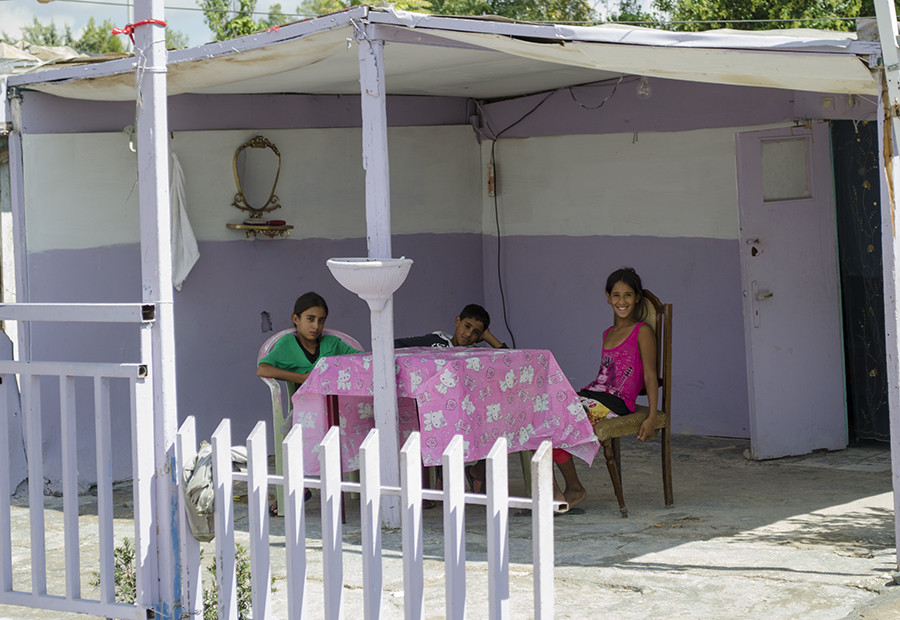
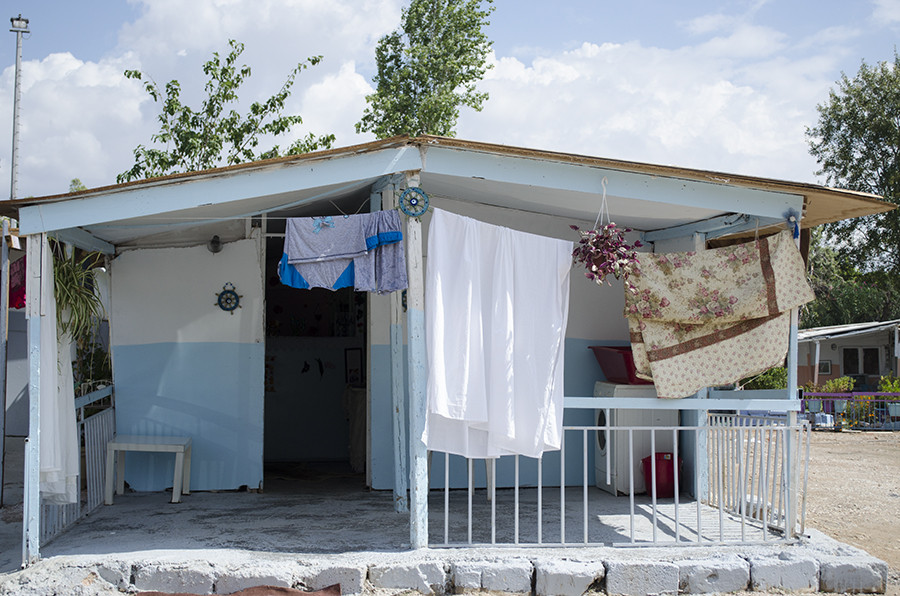
Ο ασφαλτοστρωμένος δρόμος διασχίζει τον καταυλισμό, που αποτελείται από πολλές παράγκες, κάποιες περιποιημένες και κάποιες άλλες όχι. Κάποιες παράγκες έχουν αυλές με λουλούδια και τραπέζια κάτω από πέργολες, και από παντού ακούγονται φωνές συζητήσεων. Σε μια γωνία της παραγκούπολης, σε μια μικρή αυλή, στην οποία τιτιβίζει ένας κοκκινολαίμης, κάθεται μια κυρία με τα έξι δισέγγονά της γύρω της.


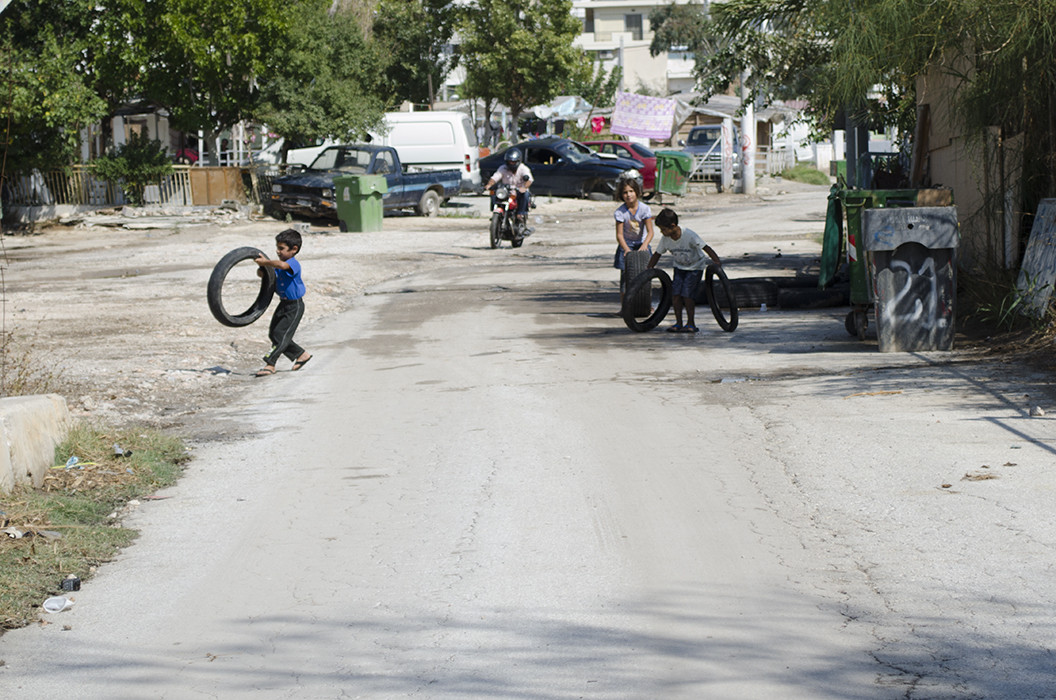
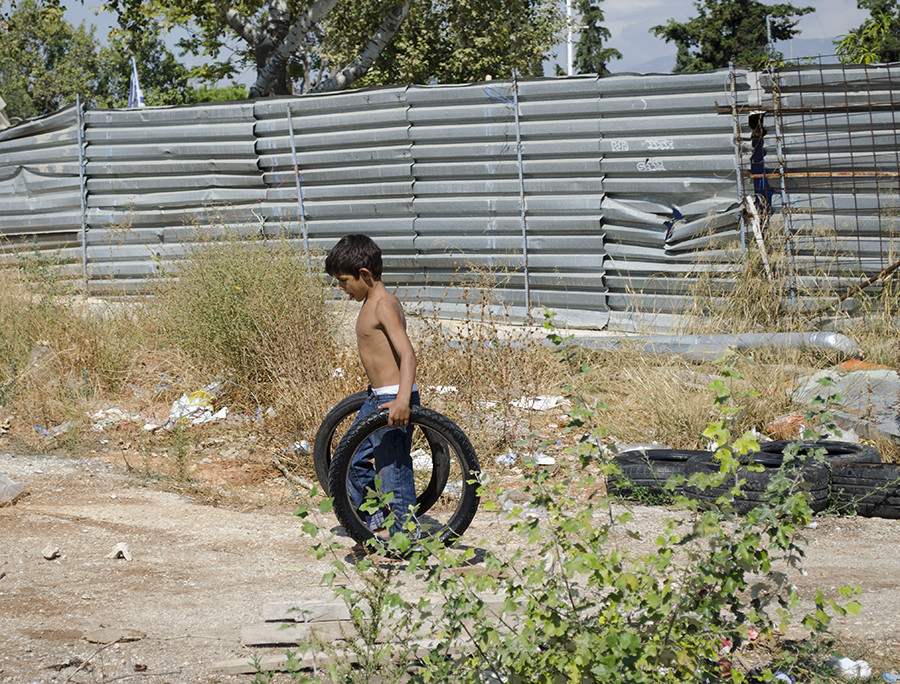
Άλλα παιδάκια τρέχουν αμέριμνα, χωρίς τις μπλούζες τους, παίζοντας μεταξύ τους ή με τα σκυλιά τους και κουβαλώντας παλιά λάστιχα από δω και από εκεί.

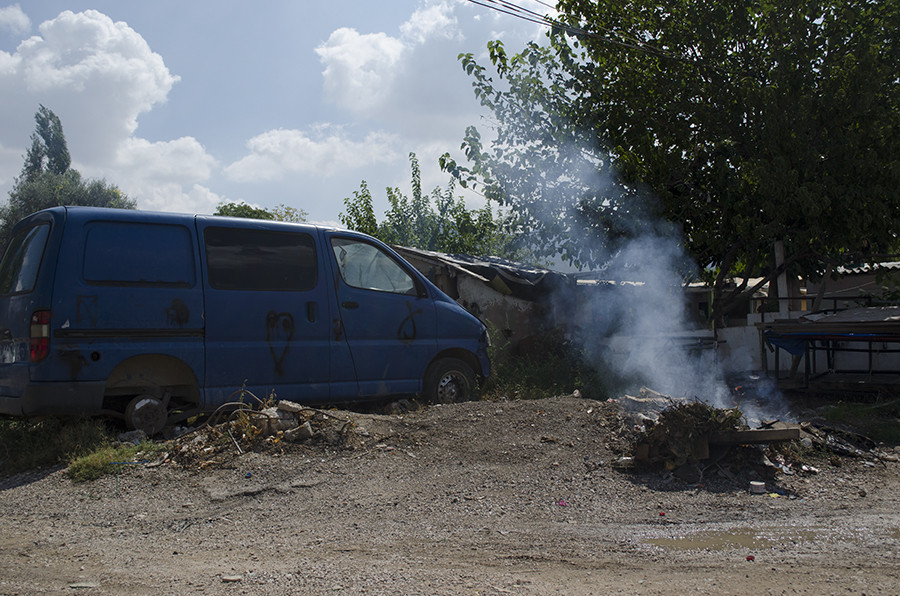
Κατεστραμμένα αυτοκίνητα, χωρίς πόρτες και ρόδες, βρίσκονται αφημένα στις γωνίες ορίζοντας έτσι τα “οικοδομικά τετράγωνα” της παραγκούπολης. Οι χωμάτινοι - κυρίως - δρόμοι κόβονται από αυλάκια με νερό, που δημιουργούνται από τις μπουγάδες και τα λάστιχα ποτίσματος.


Ο Στέλιος Καλαμιώτης, ο πρόεδρος του καταυλισμού, μας υποδέχεται κατευθείαν στην αυλή του. Μια όμορφη μικρή αυλή, με γλάστρες και λουλούδια και μια πέργολα που δημιουργεί σκιά.

Ο ίδιος μας λέει ότι στον καταυλισμό ζουν κοντά 70 οικογένειες και συνολικά 500 άνθρωποι. Αυτός, από μόνος του, έχει 5 παιδιά, 14 εγγόνια και περιμένει το 15ο! Ο κύριος Στέλιος μεγάλωσε στον καταυλισμό. Τα παιδιά του και τα εγγόνια του γεννήθηκαν και μεγάλωσαν επίσης εκεί. “Όταν ήμουν μικρός έπαιζα για 10 χρόνια ποδόσφαιρο στον Απόλλωνα Χαλανδρίου”, θυμάται.

“Είμαστε Έλληνες πολίτες, μη νομίζετε! Πηγαίνουμε και φαντάροι. Ο παππούς μου πολέμησε. Ο θείος μου ήταν ο Βασίλης Μήτρου! Εκείνος ήταν από την Αλεπούσα Ευβοίας. Καλόγερος. Αλλά στον πόλεμο ντυνόταν Γερμανός και σκότωνε τους Ναζί. Μετά τον φάγανε οι δικοί του... Στην Αλεπούσα κάθε χρόνο ανήμερα της επετείου της 28ης Οκτωβρίου του αφήνουν στεφάνια”, μας λέει με χαρά.

Ο Χρήστος Καλαμιώτης, 25 ετών, γιος του προέδρου του καταυλισμού, δηλώνει πως “δεν είμαστε παραπονεμένοι από την ζωή μας. Εγώ μεγάλωσα εδώ, και τώρα μεγαλώνω τα παιδιά μου εδώ. Έτσι μάθαμε να ζούμε. Κάποιος που είχε πολλά και δεν είχε συνηθίσει τα λίγα έχει πλέον πρόβλημα. Εγώ με μια φακή και ένα ντοματάκι,τρώω και είμαι ευχαριστημένος. Με αυτή την λογική, έχουμε καλά βιώματα”.


Η ζωή στον καταυλισμό ξεκινά με δουλειά, κυρίως στη λαϊκή και ως παλιατζήδες, ώστε το μεσημέρι να μπορούν να φτιάξουν φαγητό. Μετά θα έρθει η ξεκούραση, το μπάνιο, και ύστερα η κουβέντα με τους φίλους, για την ομάδα, για την επικαιρότητα. Μετά ξανά από την αρχή.

Πριν βρεθούν στον καταυλισμό οι οικογένειες έμεναν σε διαμερίσματα στην ίδια περιοχή. “Τότε το Χαλάνδρι δεν ήταν τόσο ανεπτυγμένο”, δηλώνει ο Στέλιος Καλαμιώτης. “Αλλά μετά δεν μας έβαζαν σε σπίτια γιατί είχαμε πολλά παιδιά, όχι γιατί είμαστε τσιγγάνοι. Έτσι, σιγά - σιγά, ένας - ένας, βρεθήκαμε εδώ. Σαράντα χρόνια πάνε τώρα”, συμπληρώνει.

“Πλέον λέμε το κρέας κρεατάκι. Μακάρι να είχαμε πέντε - δέκα ευρώ, να πάρουμε παπουτσάκια στα παιδιά”, δηλώνει η γυναίκα του.

Πηγαίνοντας βαθύτερα στον καταυλισμό, βλέπουμε ένα σπίτι με επτά παιδιά και κανέναν γονιό. Η μητέρα τους είναι προφυλακιστέα κατηγορούμενη για κλοπή και πρόσφατα έχασαν τον πατέρα τους. Ο πρόεδρος προσπαθεί με την βοήθεια του Συνήγορου του Πολίτη, των τοπικών Αστυνομικών Αρχών, αλλά και της Κοινωνικής Πρόνοιας να συλλέξει τα απαραίτητα έγγραφα και άδειες ώστε ο δικηγόρος τους να καταφέρει να βγάλει από την φυλακή την μάνα για να επιστρέψει στα παιδιά της.


Αλλά αυτό δεν είναι το μοναδικό τους πρόβλημα. Πλέον έχουν να αντιμετωπίσουν και τον Δήμο Χαλανδρίου. Ο δήμαρχος, Γιώργος Κουράσης, με εισαγγελική εντολή επιδιώκει να κατεδαφίσει τον καταυλισμό. Αν και ο σχεδιασμός, όπως δήλωσε στο tvxs.gr, ήταν να ξεκινήσει χθες και να διαρκέσει πέντε ημέρες, με δικαστική παρέμβαση η κατεδάφιση αναβλήθηκε για δυο μήνες, με σκοπό να βρεθεί κάποιος χώρος μετεγκατάστασης των ανθρώπων αυτών.

Η αιτιολογία, σύμφωνα με την Δημαρχεία, είναι πως ο καταυλισμός είναι αυθαίρετος (και οι ίδιοι οι τσιγγάνοι, βέβαια, μας εξήγησαν ότι όντως ο χώρος είναι εκτός σχεδίου), ότι γίνεται καταπάτηση ιδιοκτησίας και πως “οι κάτοικοι ενοχλούν τους γείτονες σε υπέρτατο βαθμό”.

“Εντάξει, βάζουμε μουσική. Παντού συμβαίνουν αυτά. Δεν είναι αυτός λόγος να μας διώξουν από εδώ έτσι, χωρίς μέριμνα. Υγειονομικά είμαστε εντάξει. Έχουν γίνει και έλεγχοι. Τουαλέτες χτίσαμε, όπως και αποχέτευση. Δεν έχουμε πρόβλημα να φύγουμε, αλλά αυτό θα πρέπει να γίνει ύστερα από την παρουσίαση μιας σωστής  λύσης”, τονίζει ο Χρήστος Καλαμιώτης.

Ο Στέλιος Καλαμιώτης μας εξηγεί ότι “όντως το θέμα της ιδιοκτησίας είναι μπερδεμένο. Ιδιοκτήτες φαίνεται να είναι κάποιοι υπάλληλοι του υπουργείου Εμπορίου το 1967. Αυτοί ισχυρίζονται ότι έχουν τα συμβόλαια και πως τότε είχαν μοιραστεί σε μια κοπή πίτας”. Ο ίδιος δηλώνει πάντως πως θα ερευνήσουν το θέμα της χρησικτησίας, η οποία βάσει νόμου υποστηρίζει ότι μια ιδιοκτησία περνά στα χέρια εκείνου που την χρησιμοποιεί αποκλειστικά για τουλάχιστον 20 χρόνια.

“Πάντως η δικιά μας πληροφόρηση είναι ότι εδώ θέλουν να χτίσουν κτίριο για το υπουργείο Οικονομικών”, αποκαλύπτει ένας από την ομήγυρη.

Ο Δήμος Χαλανδρίου, πάντως, σύμφωνα με δημοσίευμα του Βήματος τον περασμένο Ιούλιο, φέρεται να εμπλέκεται σε οικονομικό σκάνδαλο σχετικό με την καθαριότητα στον χώρο του καταυλισμού. Σύμφωνα με το ρεπορτάζ της εφημερίδας, είχε χορηγηθεί στον Δήμο κονδύλι ύψους τριών εκατομμυρίων ευρώ για να αξιοποιηθεί στις υπηρεσίες καθαριότητας της περιοχής, κάτι που δεν συνέβη ποτέ. Η συγκεκριμένη υπόθεση ερευνάται από το Σώμα Επιθεωρητών Δημόσιας Διοίκησης και το ΣΔΟΕ.


Τα περισσότερα από τα 52 παιδιά του καταυλισμού πηγαίνουν καθημερινά στο σχολείο. Ο πρόεδρος του καταυλισμού συνεργάζεται με το Πανεπιστήμιο Αθηνών, ώστε να έρχεται λεωφορείο για να πηγαίνει τα παιδιά στο σχολείο.

“Το χαίρονται. Ετοιμάζονται από το βράδυ, ξυπνάνε το πρωί και όλα μαζί πάνε στο σχολείο. Τα παιδιά μας πριν ήταν σωστά αγρίμια. Το σχολείο τους άλλαξε. Τους ηρέμησε. Αλλά και οι δασκάλες είναι πολύ καλές. Όλο τον Αύγουστο δυο νεαρές κοπέλες ήταν εδώ κάθε μέρα και έκαναν μάθημα στα παιδιά”, δηλώνει ένας πατέρας.

“Σήμερα, όμως, δεν πήγαν όλα τα παιδιά. Κάποια έμειναν πίσω γιατί φοβήθηκαν ότι θα έρθουν οι μπουλντόζες να ρίξουν τα σπίτια”.